Mandragora Mortar (she/her)

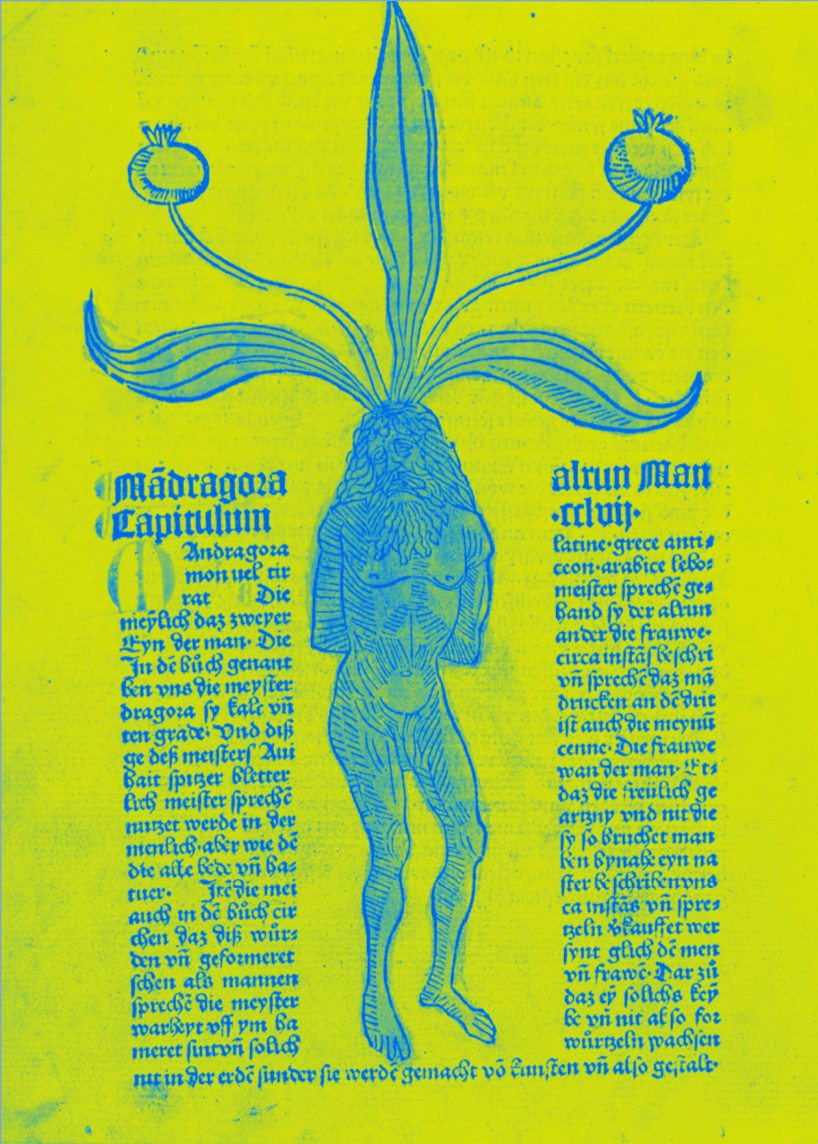
For centuries, the mandrake has occupied an ambiguous place between medicine and myth. Associated in European folklore with healing, fertility (it was said to spring from the semen of hanged men), protection, persecution, and magic (Jeanne d’Arc was said to wear a mandrake as a pendant), it has long embodied the blurred boundary between botanical knowledge and enchantment.
Mandragora Mortar (she/her) reimagines this legendary plant as a speculative ritual technology that symbolizes the self-sourced nature(s) of queer survival and becoming, honouring witches, herbalists, outcast healers, and keepers of embodied knowledge.
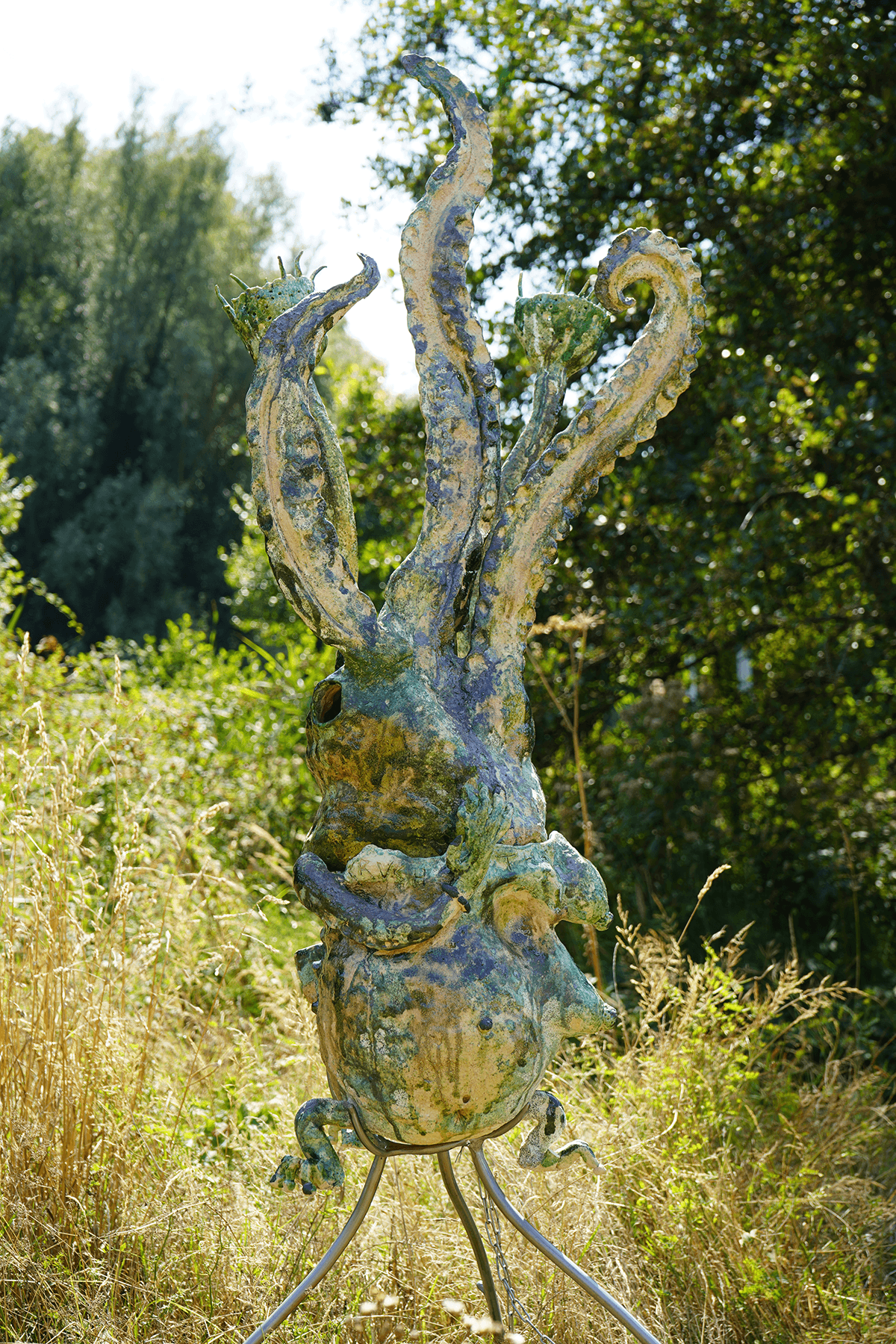
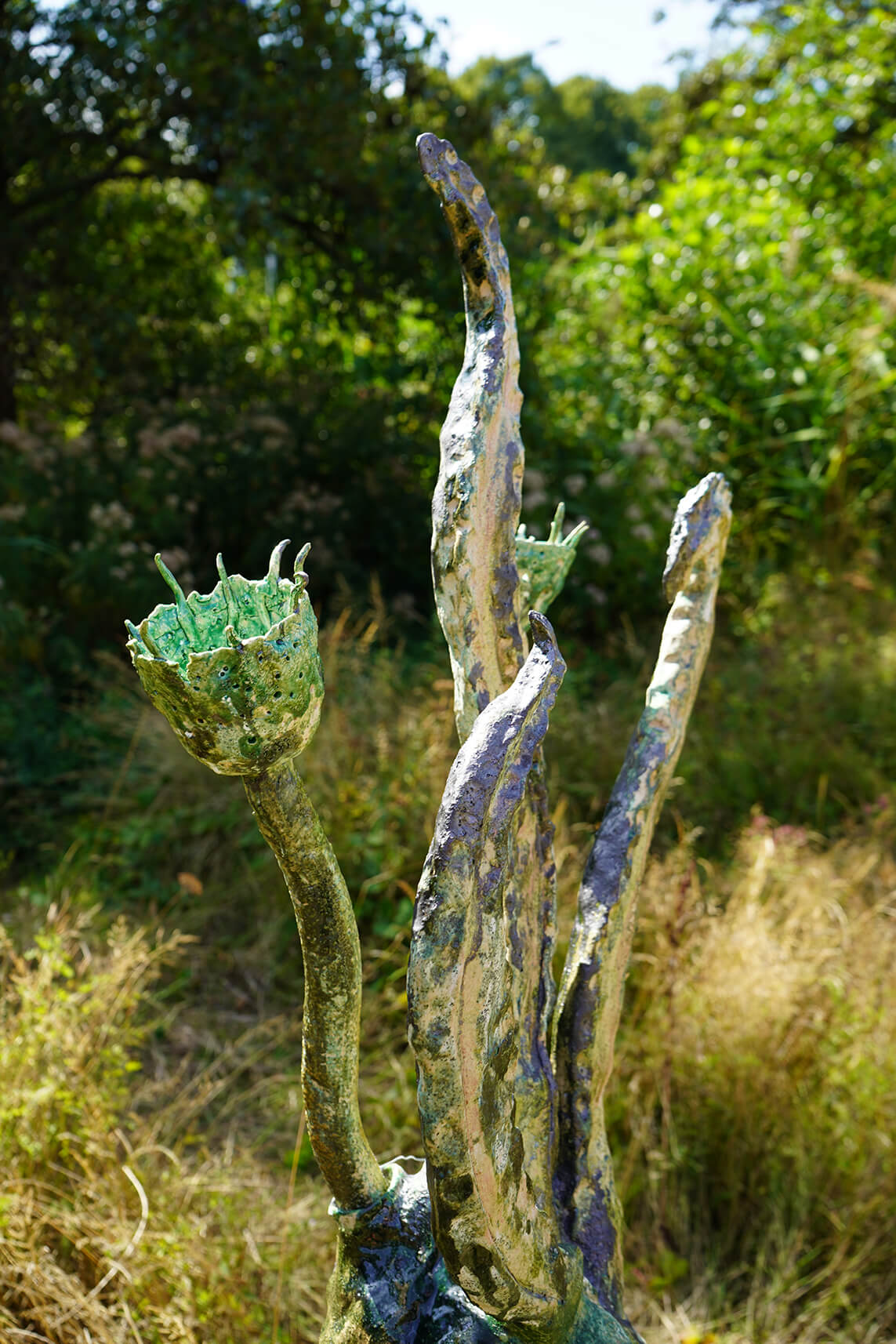
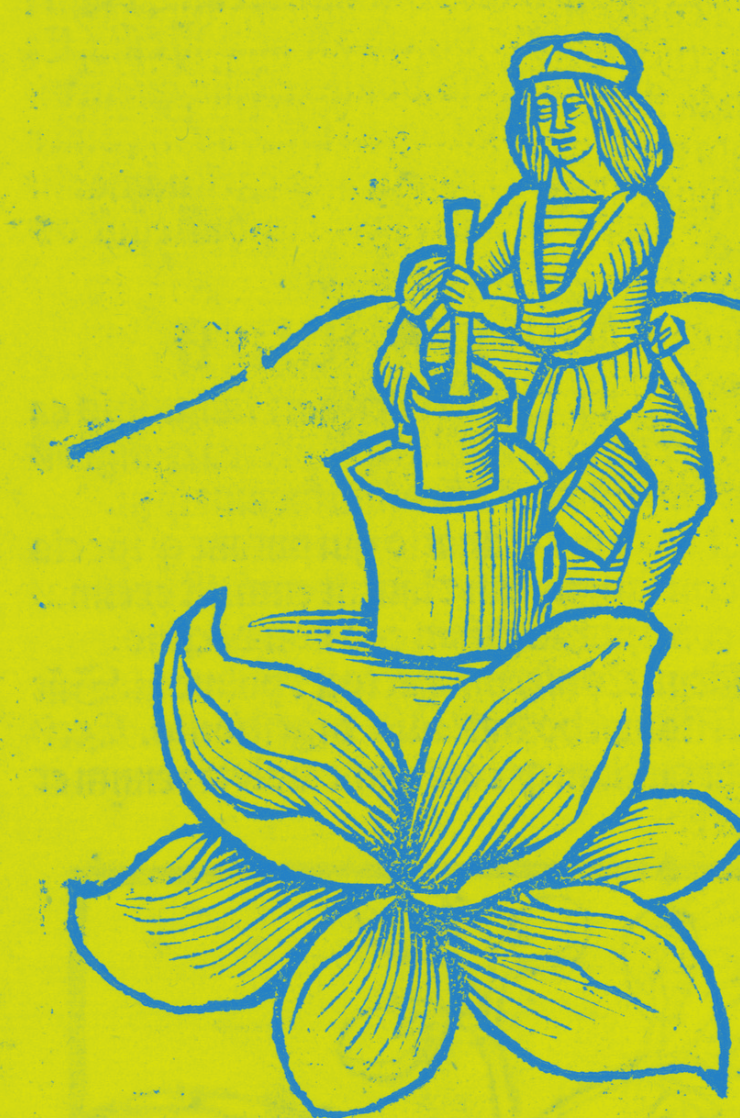
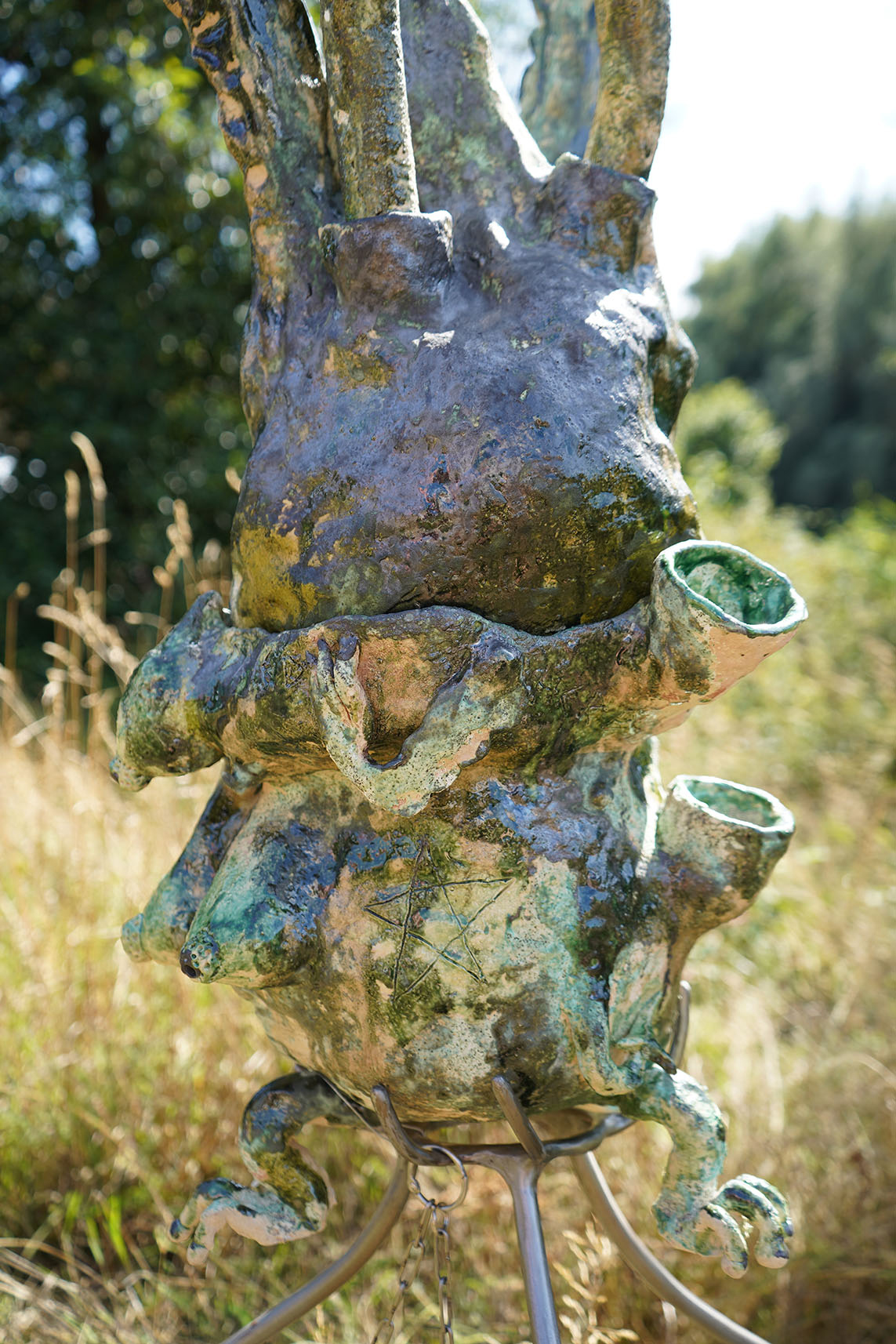
Shaped like the mythical Mandragora officinarum (a toxic perennial plant in the nightshade family—famous for its forked, human-shaped roots), the ceramic vessel presents itself as a mortar for grinding herbs, roots, minerals, and other ingredients used in ritual. The ceramic work, glazed with iron and copper sulfites and inscribed with words and symbols, hovers somewhere between functional tool, sacred effigy, and archaeological relic.
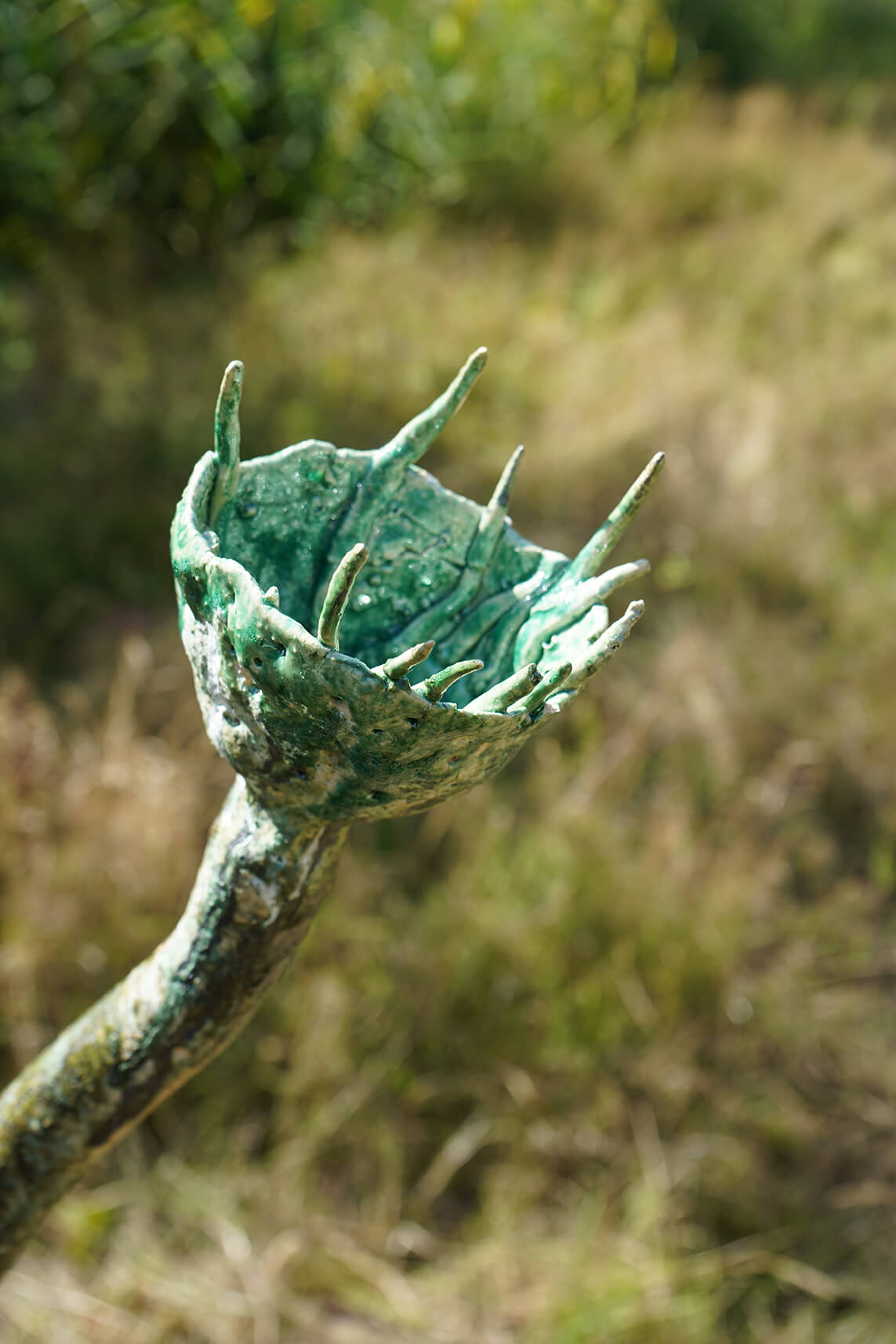
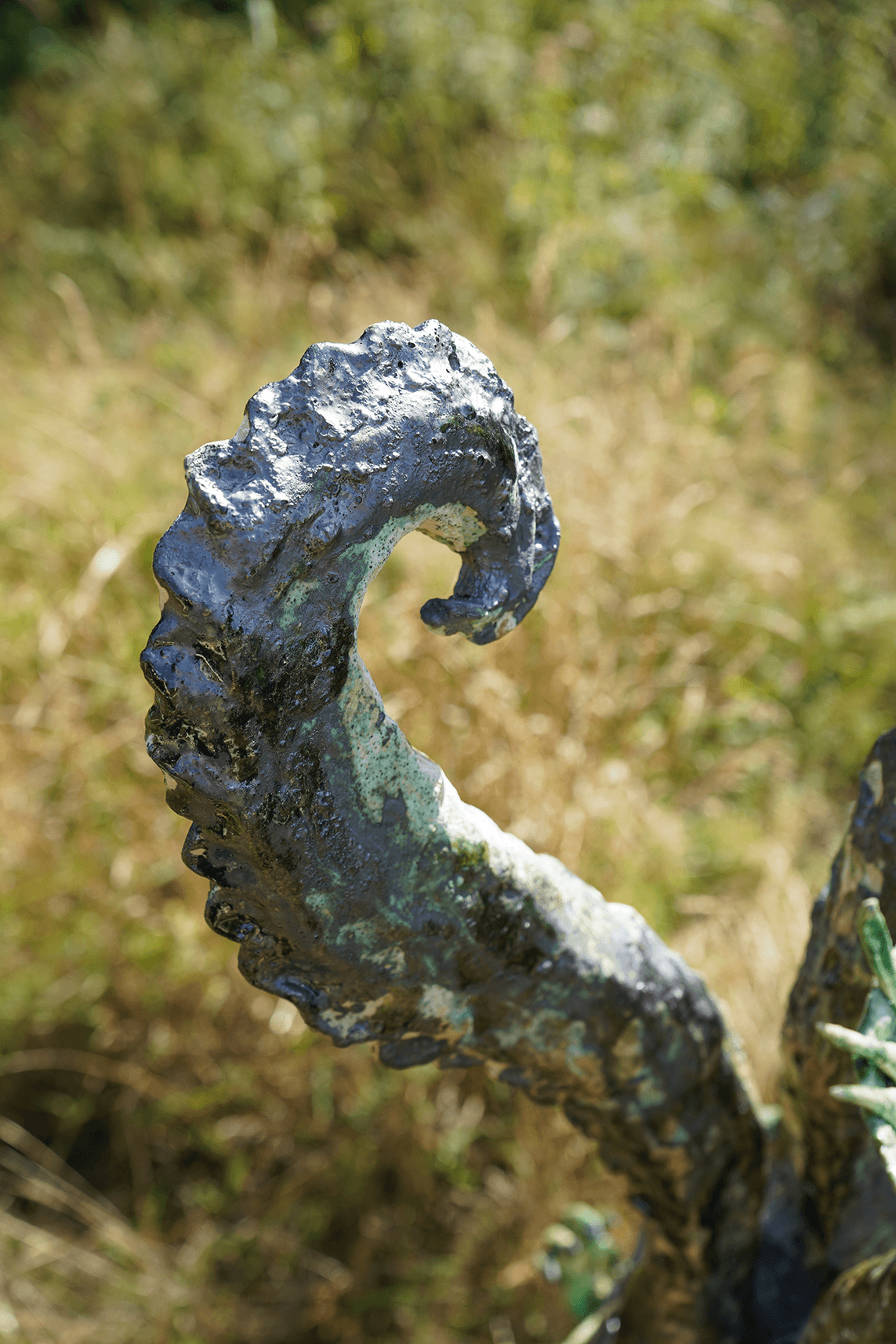
The top of the vessel is adapted from sixteenth-century woodcut illustrations of mandrakes: crowned by three leaves and two flowering ceramic stems that, in this case, function as pestles, the work allows for the crushing of herbs within. Together with Alembic (they/them) and the Herbal Oven (Grief Pot), she forms a triptych representing an alchemist's set.
Carried by three tiny feet, like the witch’s cauldron, her three-leaky-breast-bearing body draws on traditions of herbalism, witchcraft, and alchemy. Possibly functional—but not needing to be at all—she invites us to keep remembering (and using) the medicines all around.
- Mandragora Mortar is shown at Plucking the Broom, at No Limits! Art Castle, Amsterdam, alongside works of Müge Yilmaz, Ginevra Petrozzi, Noa Zuidervaart, Shani Leseman, and others.
- Mandragora Mortar (she/her) was made at the EKWC residency.
- Here is an instagram post dedicated to her.

Credits
Ceramic work & glazes developed during my EKWC residency.
Metal tripod: Michele Bazzoli
Art, text, photograhpy: Venus Jasper
Shoot assistant: Nelson Campos